Introduction
A monocular telescope provides a simple way to magnify distant scenes while keeping the equipment relatively compact. Unlike binoculars, which use two optical channels, a monocular is designed for viewing through one optical path. This can make it useful for people who want a portable observation tool for travel, hiking, wildlife watching, bird watching, sightseeing, and other outdoor activities.
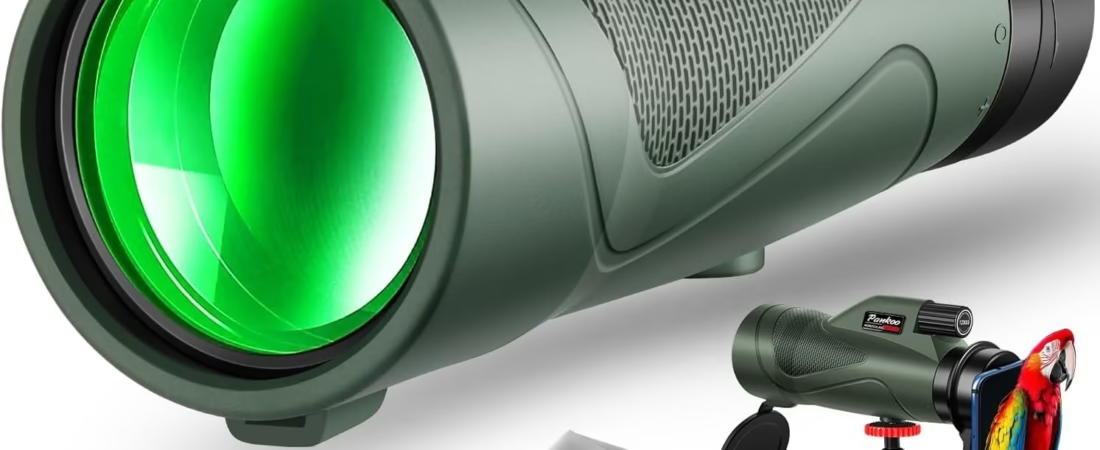
The Pankoo 12×60 HD Monocular Telescope is described as a high-powered monocular designed for adults. The product listing also presents it as a telescope that can be used with a smartphone, making it relevant to people who want to combine optical observation with casual photography.
The “12×60” designation is particularly useful for understanding the basic optical concept. The first number refers to 12x magnification, while the second generally indicates a 60mm objective lens. These two specifications describe different parts of the optical system. Magnification determines how enlarged a distant object appears, while the objective diameter influences the amount of light the front lens can collect.
A larger objective does not automatically guarantee a clearer image, and higher magnification does not necessarily mean that more useful detail will always be visible. Optical quality, atmospheric conditions, stability, focus, available light, and the user’s ability to keep the instrument steady all affect what can actually be seen.
This article explores the Pankoo 12×60 monocular as an outdoor optical instrument. It explains the meaning of its main specifications, discusses practical applications, examines smartphone photography, compares monoculars with other optical categories, and highlights important considerations for anyone researching this type of equipment.
Understanding the 12×60 Configuration
Before discussing individual features, it helps to understand what “12×60” means.
What Does 12x Mean?
The 12x specification refers to magnification.
In simple terms, an object viewed through a true 12x optical system appears approximately twelve times larger in angular size than when viewed with the unaided eye from the same position.
For example, if a distant landmark occupies a very small portion of your natural field of view, magnification can make it appear significantly larger.
However, magnification does not create information that is not already available.
If an object is obscured by fog, atmospheric haze, poor lighting, or vegetation, increasing magnification will not remove those obstacles.
Higher magnification also makes movement more obvious.
A small movement of the user’s hands can cause the image to shift significantly when viewed at 12x.
This is one reason stable positioning becomes increasingly useful as magnification increases.
What Does 60 Mean?
The 60 in 12×60 generally refers to a 60mm objective lens.
The objective is the front lens of the monocular.
A larger objective can gather more light than a smaller objective under comparable conditions.
This can be useful when observing during early morning, late afternoon, or other situations where available light is lower than during the middle of the day.
There is a tradeoff, however.
A larger objective also tends to increase the physical size and weight of an optical instrument.
For someone hiking several miles, the difference between a compact monocular and a larger optical system can become noticeable.
Key Features
12x Optical Magnification
The 12x magnification provides a substantial increase over unaided viewing.
It can be useful for observing distant subjects such as birds, wildlife, mountains, buildings, boats, and other landmarks.
The relatively high magnification also means that users should expect a narrower field of view compared with lower-powered monoculars.
A lower-power optic can sometimes be easier to use when trying to locate a moving animal.
The 12x setting is more oriented toward examining a subject once it has been located.
60mm Objective Lens
The 60mm objective provides a relatively large front lens for a portable monocular.
The objective collects incoming light before the optical system enlarges the image.
In low-light conditions, the larger objective can provide useful light-gathering potential.
It is important to remember that objective size alone does not determine brightness.
Lens coatings, optical glass, internal design, exit pupil, and environmental conditions all contribute to the final image.
High-Definition Optical Concept
The product is described as an HD monocular.
In optical equipment, image quality is influenced by the entire optical system rather than one specification.
Important factors include:
- Lens quality
- Optical coatings
- Alignment
- Focus
- Contrast
- Available light
- Atmospheric conditions
- Stability
An “HD” description should therefore be viewed as part of the product’s positioning rather than a guarantee of perfect detail at every distance.
Smartphone Compatibility
The product listing identifies smartphone compatibility, which allows users to experiment with photographing the magnified view.
This technique is often called digiscoping.
A smartphone adapter can position the phone’s camera behind the monocular’s eyepiece.
The monocular provides the optical magnification, while the smartphone captures the resulting image.
This can be particularly interesting for people who want to document wildlife, landscapes, birds, or distant landmarks.
Portable Monocular Format
The monocular design uses a single optical channel rather than the two-channel configuration of binoculars.
This can simplify the physical design and make the instrument convenient to carry.
The actual portability depends on the dimensions and weight of the specific model.
A 60mm objective is relatively substantial compared with very compact travel monoculars, so users who plan long hikes should consider the complete carrying setup.
Manual Focusing
A high-powered optical instrument requires accurate focusing.
Distant objects can appear blurry if the focus is slightly incorrect.
This becomes particularly noticeable at higher magnification because small focus errors are easier to see.
Users should take time to focus the image before evaluating its detail.
How the Optical System Works
A monocular may look like a simple tube, but several optical elements work together.
Objective Lens
The front objective gathers light from the scene.
The 60mm objective designation indicates its approximate diameter.
Internal Lenses
The incoming light travels through a series of internal optical components that form and enlarge the image.
The quality and alignment of these components influence contrast and clarity.
Focusing System
The focusing mechanism adjusts the optical system so that the subject appears sharp.
Different distances require different focus positions.
Eyepiece
The eyepiece presents the magnified image to the user’s eye.
Eye position is important because moving too far away or too close can reduce the visible field.
Smartphone Adapter
When the smartphone accessory is used, the phone camera is positioned behind the eyepiece.
The phone then records the image produced by the monocular.
How It Can Be Used
Bird Watching
Bird watching is one of the most common applications for a portable monocular.
Birds can be difficult to see clearly when they are perched high in trees or located across open spaces.
A 12x optical system can provide more visual enlargement than the naked eye.
However, locating a moving bird at high magnification can be challenging.
A practical approach is to first identify the bird without looking through the monocular, then bring the monocular into position and focus on the subject.
Wildlife Observation
Wildlife enthusiasts can use a monocular to observe animals from a distance.
This can be useful in parks, open landscapes, wetlands, forests, and other natural environments.
Maintaining distance is important.
The ability to magnify a distant animal can reduce the temptation to approach too closely.
Wildlife observation should be conducted in a way that does not disturb animals, particularly during nesting, breeding, or other sensitive periods.
Hiking
A monocular can be useful during hiking when the trail passes through scenic landscapes.
It can help users examine distant mountain ridges, rock formations, buildings, bridges, or other landmarks.
Because 12x magnification makes movement more visible, hikers should stop in a stable location before using the device.
Trying to walk while looking through a high-powered monocular can increase the risk of tripping or losing awareness of the terrain.
Camping
A monocular can add an observation component to camping.
During the day, campers may use it to observe landscapes, wildlife, or distant terrain.
During early morning or evening, the larger objective may provide useful light-gathering potential while there is still some ambient illumination.
A monocular should not replace a flashlight or headlamp.
It magnifies an image but does not illuminate nearby obstacles.
Travel and Sightseeing
Travelers can use a monocular to examine distant landmarks.
Potential subjects include:
- Mountains
- Coastal landscapes
- Historic buildings
- Towers
- Bridges
- Ships
- Architectural details
- Scenic viewpoints
The single-eye design can be convenient when carrying photography and travel equipment.
Marine and Coastal Observation
From an appropriate and safe location, a monocular can be useful for observing distant boats, coastlines, cliffs, and other large features.
Atmospheric conditions become particularly important near water.
Humidity, haze, and heat shimmer can reduce contrast over long distances.
Sporting Events
Depending on venue rules, a monocular can help spectators observe distant activity at outdoor sporting events.
Users should check venue policies before bringing optical equipment into stadiums or controlled locations.
Smartphone Photography
The smartphone adapter can allow users to capture images through the monocular.
This can be useful for documenting:
- Birds
- Wildlife
- Landscapes
- Distant architecture
- Scenic views
- The Moon
- Boats and coastal scenery
The quality of the resulting photograph depends on both the optical instrument and the smartphone camera.
Using a Smartphone With the Monocular
What Is Digiscoping?
Digiscoping is the process of taking photographs or video through an optical device.
The phone is positioned behind the monocular’s eyepiece.
The phone camera captures the magnified optical image.
This differs from simply using the phone’s digital zoom.
The monocular provides physical optical magnification before the phone records the scene.
Alignment Is Critical
The camera lens must be aligned with the eyepiece.
If the alignment is slightly off, the photograph may show:
- A black border
- A circular image
- Vignetting
- Uneven brightness
- Reduced clarity
- Difficulty focusing
The smartphone adapter is designed to make alignment easier, but users should still check the camera position carefully.
Phone Cases Can Cause Problems
A thick smartphone case may prevent the camera from getting close enough to the eyepiece.
Depending on the adapter design, removing the case may improve alignment.
Users should make sure the phone is securely held before lifting or moving the complete setup.
Multiple Smartphone Cameras
Many modern smartphones contain several rear cameras.
The camera physically aligned with the monocular may not be the same camera used automatically by the phone.
Switching between the main, telephoto, and ultrawide cameras can change the alignment.
For consistent results, users should identify which camera is positioned over the eyepiece.
Digital Zoom Should Be Used Carefully
The monocular is already providing optical magnification.
Adding excessive smartphone digital zoom can make image imperfections more noticeable.
A better starting point is to center the subject optically and then use modest digital cropping or zoom only when necessary.
Stability and High Magnification
A 12x monocular can be used handheld, but stability is an important part of the viewing experience.
Every small movement is magnified.
This is especially noticeable when:
- Observing distant birds
- Photographing wildlife
- Viewing small objects
- Recording video
- Looking across long distances
A stable support can help.
A tripod may be useful when the device is compatible with appropriate mounting equipment.
Even without a tripod, the user can sometimes improve stability by resting the monocular against a stable surface.
For smartphone photography, stability becomes even more important because the phone adds weight and the camera can magnify movement on the screen.
Understanding the Field of View
Field of view refers to how much of the surrounding scene is visible through the optical device.
As magnification increases, the field of view generally becomes narrower.
This creates a practical tradeoff.
A lower-powered monocular can make it easier to find a bird flying across the sky.
A 12x monocular can provide more enlargement once the bird has been located.
The narrower view is not necessarily a flaw.
It is a normal consequence of higher magnification.
Users should choose the optical power based on how they intend to observe rather than assuming that the highest available magnification is always the most useful.
Understanding Exit Pupil
Exit pupil is another important optical concept.
It describes the diameter of the beam of light exiting the eyepiece.
For a conventional 12×60 configuration, the theoretical exit pupil can be calculated by dividing the objective diameter by magnification:
60 ÷ 12 = 5mm
A 5mm exit pupil is relatively substantial for many daytime and moderate-light viewing situations.
However, this calculation is based on the stated optical configuration and does not independently verify the actual optical construction of the particular product.
The human eye also changes according to lighting conditions.
In bright daylight, the pupil becomes smaller.
In darker conditions, it can become larger.
A larger exit pupil can make an optic more forgiving regarding eye positioning and available light, although other factors still determine image quality.
Who It May Be Suitable For
Bird Watchers
Bird watchers who want more magnification than a basic compact monocular may find a 12x configuration interesting for distant subjects.
Wildlife Enthusiasts
The device can be useful for observing animals from a responsible distance.
Hikers
Hikers may use it for viewing distant scenery, landmarks, and terrain features.
Campers
Campers can use the monocular during daytime and twilight observation.
Travelers
The monocular can be useful for sightseeing and viewing distant architecture or natural landscapes.
Smartphone Photography Hobbyists
The included smartphone compatibility makes it relevant to users interested in digiscoping.
Outdoor Observation Beginners
People new to optical observation can use a monocular as an introduction to magnified viewing.
However, the 12x magnification means beginners may need some practice with stability and target acquisition.
Important Things to Consider
Higher Magnification Is Not the Same as More Detail
Magnification enlarges an image.
It does not create information that the optical system cannot resolve.
A distant subject obscured by haze will remain hazy even when magnified.
Atmospheric Conditions Matter
Air between the observer and the target can significantly affect image quality.
Common problems include:
- Humidity
- Dust
- Fog
- Heat shimmer
- Pollution
- Smoke
These effects become more noticeable at longer distances.
Hand Movement Is Magnified
A 12x optic can make small movements appear large.
This is especially relevant when using a smartphone adapter.
Larger Objectives Increase Size
A 60mm objective is larger than the objective found on many compact monoculars.
This can provide more light-gathering potential but can also increase the physical size of the device.
Smartphone Compatibility Is Not Universal
An adapter may not work equally well with every phone.
Camera position, phone dimensions, and case thickness all matter.
Brightness Depends on More Than Objective Size
A larger objective can collect more light, but actual image brightness depends on the complete optical design.
Lens coatings, glass quality, transmission, magnification, and environmental conditions all matter.
Do Not Look at the Sun
Never point the monocular directly at the Sun.
Magnifying sunlight can cause severe and permanent eye damage.
This remains true even if a smartphone is attached to the monocular.
Respect Wildlife
Use the device to observe wildlife from an appropriate distance.
Avoid chasing, disturbing, or approaching animals for a closer view.
Respect Privacy
High-powered optics make it possible to observe distant areas.
Do not use the monocular to intentionally invade another person’s privacy.
Check Local Rules
Protected natural areas, wildlife reserves, private properties, and event venues can have their own rules concerning observation equipment and photography.
Follow applicable requirements.
Comparison of General Optical Categories
Monocular vs. Binoculars
A monocular uses one optical channel.
Binoculars use two.
Binoculars can provide a more natural viewing experience for some people because both eyes are engaged.
A monocular can be more compact and simpler to carry.
The choice often comes down to personal preference and portability.
12x Monocular vs. Lower-Power Monocular
A lower-power monocular generally offers a wider field of view and can be easier to stabilize.
A 12x monocular provides more enlargement but requires greater attention to stability.
For moving subjects, lower magnification can sometimes be easier.
For distant stationary subjects, higher magnification may provide more useful enlargement.
Monocular vs. Spotting Scope
Spotting scopes are generally designed for stationary, detailed observation and are often used with tripods.
A monocular can be more portable.
A spotting scope may be more appropriate for long observation sessions where maximum stability and detailed viewing are priorities.
Monocular vs. Astronomical Telescope
An astronomical telescope is specifically designed for celestial observation.
It can use specialized mounts, eyepieces, and accessories.
A terrestrial monocular is designed primarily for daytime and outdoor observation.
While a monocular can potentially be used to view bright celestial objects, it should not automatically be considered a replacement for a dedicated astronomical telescope.
Optical Monocular vs. Smartphone Zoom
A smartphone zoom enlarges the image electronically or switches between camera lenses.
A monocular provides optical magnification before the phone captures the image.
Using the two together can combine optical and digital imaging, but excessive digital zoom can reduce image quality.
Improving Outdoor Observation
Start With the Subject in Your Normal Field of View
Before raising the monocular, locate the subject with your eyes.
This is particularly helpful when observing birds and moving wildlife.
Use Stable Positioning
Hold the monocular with both hands where practical.
Rest your arms or the device against a stable object if possible.
Focus Slowly
Do not rotate the focus control rapidly without observing the image.
Small changes can make a significant difference at high magnification.
Watch the Weather
If the air is hazy, distant details may be limited regardless of the optical system.
Clear, dry conditions can provide better long-distance contrast.
Keep the Lens Clean
Dust and fingerprints can reduce contrast.
Use suitable optical-cleaning materials rather than abrasive cloths.
Use the Smartphone Carefully
Secure the phone before moving the monocular.
If the adapter is not firmly attached, the phone could fall.
Take Several Images
When photographing through an optical instrument, small movements can affect individual images.
Taking several photographs can increase the chance of capturing a stable frame.
Using the Monocular for Bird Watching
Bird watching presents a unique challenge because birds move quickly.
A 12x monocular can provide substantial enlargement, but finding the bird through a narrow field can take practice.
A practical observation process is:
- Identify the bird’s general location without the monocular.
- Keep your gaze fixed on that area.
- Raise the monocular without dramatically changing your body position.
- Locate the bird within the field of view.
- Adjust focus.
- Stabilize the monocular.
- Observe without approaching the animal.
For smartphone photography, add the adapter only after the subject is already located.
Trying to find a moving bird through a phone screen at high magnification can be more difficult than first locating it optically.
Using the Monocular for Landscape Observation
Landscapes provide a more stable subject than wildlife.
Mountains, cliffs, buildings, towers, and other stationary features are easier to examine because they do not move while the user focuses.
This makes landscape viewing an appropriate application for a 12x monocular.
However, atmospheric haze can become the limiting factor.
A mountain may appear sharp near its base but increasingly faded toward its upper sections because of atmospheric scattering.
This is an environmental limitation rather than necessarily an optical defect.
Using the Monocular While Traveling
A travel monocular can be useful at observation decks, scenic viewpoints, coastal areas, and historical sites.
Before traveling, users should consider:
- Weight
- Protective storage
- Smartphone adapter size
- Local venue rules
- Weather conditions
- Battery needs if the phone is used for photography
The monocular can complement a smartphone rather than replace it.
The phone can provide normal photographs, maps, and communication, while the monocular provides optical magnification.
Safety Considerations
Avoid Direct Sun Viewing
Never use the monocular to look directly at the Sun.
This is the most important optical safety rule.
Use Stable Positions
When observing from a hill, cliff, boat, or elevated viewpoint, maintain awareness of your surroundings.
Do not become so focused on the optical image that you lose awareness of footing or nearby hazards.
Keep the Device Secure
When using the smartphone adapter, ensure that the phone is securely attached.
A loose phone can fall and become damaged.
Protect the Lens
Keep the front lens covered when the device is stored.
Respect Other People
Do not use a high-powered monocular to intrude on private spaces.
Frequently Asked Questions
What does 12×60 mean?
The 12×60 designation generally means 12x magnification combined with a 60mm objective lens.
Is 12x magnification powerful?
12x provides substantial magnification compared with the unaided eye and many lower-power monoculars.
It can be useful for distant observation but requires more stability.
Is the 60mm objective important?
The 60mm objective provides a relatively large light-gathering aperture for a portable monocular.
However, objective size alone does not determine image quality.
Can it be used for bird watching?
Yes. Bird watching is a natural application for a 12x monocular, although locating fast-moving birds can be more challenging at higher magnification.
Can it be used for wildlife?
Yes. It can be used to observe wildlife from a responsible distance.
Users should avoid disturbing animals.
Can it be used for hiking?
Yes. It can be used to observe distant landscapes and landmarks while hiking.
Stop in a stable location before looking through the device.
Can it be used for camping?
Yes. Camping and outdoor observation are suitable uses for a portable monocular.
It should not replace essential lighting equipment.
Can it be used for travel?
Yes. It can be useful for sightseeing, landscapes, architecture, mountains, and coastal observation.
Does it include smartphone compatibility?
The product listing identifies smartphone compatibility.
The exact fit depends on the phone and adapter configuration.
Can I take photos through the monocular?
Yes, with a compatible smartphone adapter, the phone camera can potentially capture the magnified optical image.
What is digiscoping?
Digiscoping means taking photographs or video through an optical device such as a monocular, spotting scope, or telescope.
Why does my smartphone photo show a black circle?
This usually indicates that the phone camera is not perfectly aligned with the eyepiece or is positioned too far away.
Can I use a thick phone case?
It depends on the adapter.
A thick case can interfere with camera alignment.
Does smartphone digital zoom improve the image?
Digital zoom can enlarge the recorded image, but excessive digital enlargement can make image limitations more visible.
Does the monocular have night vision?
A standard optical monocular should not automatically be considered a night-vision device.
Night vision requires specialized electronic or image-intensification technology.
Can it be used at night?
It can be used under available light, but its performance depends heavily on ambient illumination.
It should not be assumed to provide night vision in complete darkness.
Can I look at the Moon?
A bright celestial object such as the Moon may be visible through suitable optical equipment.
However, users should follow safe observation practices and never point the monocular at the Sun.
Can I look at the Sun through it?
No.
Never look directly at the Sun through a monocular, telescope, binocular, camera lens, or other magnifying optical instrument.
Does 12x magnification make distant objects completely clear?
No.
Magnification enlarges the view but cannot eliminate haze, fog, atmospheric distortion, poor lighting, or limitations in the optical system.
Why does the image shake?
Higher magnification makes small hand movements more noticeable.
Stable support can improve viewing.
Do I need a tripod?
Not necessarily for casual use, but a stable support can be helpful for prolonged observation and smartphone photography.
Why does a distant object look hazy?
Atmospheric moisture, dust, pollution, heat shimmer, and other environmental factors can reduce long-distance contrast.
Is a monocular easier to carry than binoculars?
It can be.
A monocular has one optical tube and one viewing channel, although a particular model’s size and weight still determine its portability.
What is the difference between a monocular and a spotting scope?
A spotting scope is generally designed for stable, detailed long-distance observation and is often mounted on a tripod.
A monocular is typically more portable.
Can the monocular replace binoculars?
Not necessarily.
The two formats provide different viewing experiences. Binoculars use both eyes, while a monocular uses one.
Is this monocular suitable for beginners?
It can be used by beginners, although 12x magnification may require some practice to hold and focus comfortably.
What should I do if the image is blurry?
Check the focus, lens cleanliness, eye position, and stability. Atmospheric conditions can also affect clarity.
How should the lens be cleaned?
Use appropriate optical-cleaning materials and avoid abrasive surfaces.
Can I use the monocular near water?
It can be useful for coastal or marine observation, but users should avoid unnecessary exposure to water and follow the product’s environmental specifications.
Can I bring it into a stadium?
That depends on the venue.
Some stadiums and event locations have restrictions on optical equipment.
Check the venue’s policies before attending.
Conclusion
The Pankoo 12×60 HD Monocular Telescope is designed around a relatively straightforward concept: provide substantial optical magnification in a single-eye viewing format while allowing users to connect a smartphone for photography.
The 12x specification represents the advertised magnification, while the 60mm designation generally refers to the objective lens diameter. Together, these specifications describe an optical system designed for distant observation.
The larger objective can provide useful light-gathering potential, while 12x magnification can make distant subjects appear substantially larger than they do to the unaided eye. At the same time, the combination introduces familiar tradeoffs associated with higher-powered optics. The field of view is narrower, hand movement becomes more noticeable, and atmospheric haze can become a significant limitation over long distances.
The smartphone adapter adds another practical dimension. Through digiscoping, users can attempt to photograph birds, wildlife, landscapes, architecture, and other distant subjects. Successful smartphone photography depends heavily on alignment, focus, stability, phone compatibility, and lighting conditions.
For bird watching and wildlife observation, the monocular can provide a way to view animals from a respectful distance. For hikers and travelers, it can help examine distant landscapes and landmarks. For campers, it can serve as an additional outdoor observation tool.
The most useful way to approach a high-powered monocular is to understand what its specifications actually mean rather than assuming that a larger magnification number automatically produces a better image. Optical quality is determined by the complete system, and real-world viewing is strongly influenced by the environment.
Safety should also remain part of the equation. Never point the monocular at the Sun, remain aware of your surroundings when observing from elevated or difficult terrain, secure a smartphone properly when using an adapter, and respect wildlife and personal privacy.
For people interested in portable long-distance observation and smartphone-assisted outdoor photography, the 12×60 monocular format offers a combination of magnification, light-gathering potential, and portability that can suit a range of recreational uses.