Introduction
Seeing clearly after dark can be challenging. Ordinary binoculars depend heavily on available light, and a standard flashlight may illuminate an area while simultaneously making it harder for the user to observe distant objects without disturbing the surrounding environment.
Night vision equipment is designed to address this problem by amplifying available light or, depending on the technology, using infrared illumination to create a visible image in dark conditions. For outdoor observation, wildlife viewing, property inspection, camping, and other nighttime activities, a dedicated night vision device can provide a different experience from ordinary daytime optics.
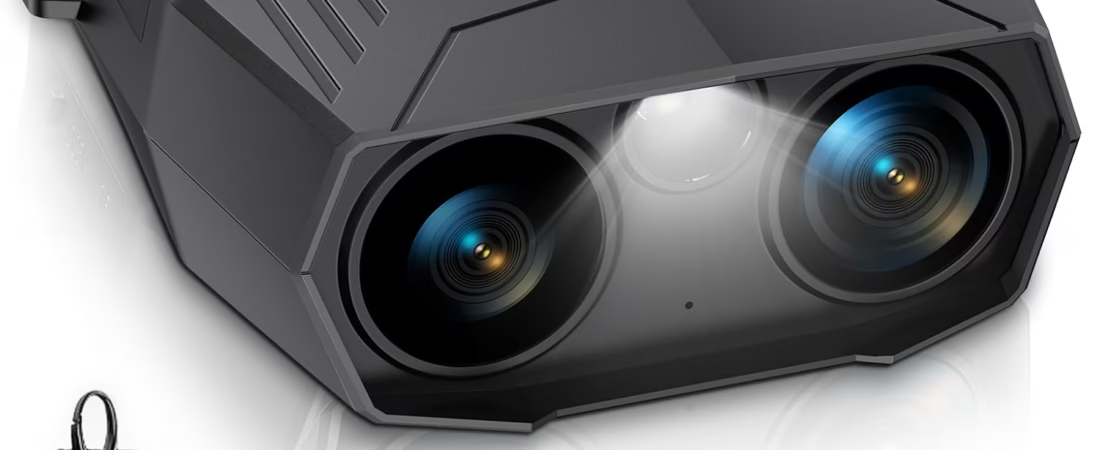
The Amazon listing for this category of product describes the device as night vision goggles and binoculars for adults, with rechargeable operation and a design intended for viewing in low-light conditions. The product is presented as a handheld or wearable-style nighttime observation device rather than a conventional pair of daytime binoculars.
Understanding how night vision works is important before using any device of this type. Not every night vision system performs in complete darkness in the same way, and features such as infrared illumination, optical magnification, display quality, battery capacity, viewing distance, and environmental conditions can all influence the image.
This guide explains the main features associated with this type of night vision binocular, how the technology can be used, what types of users may find it useful, and what factors should be considered before choosing or using nighttime observation equipment.
What Are Night Vision Goggles and Binoculars?
Night vision binoculars are optical observation devices designed to make objects easier to see in darkness or very low-light environments.
Unlike ordinary binoculars, which primarily magnify whatever light is already available, many consumer night vision devices combine optical lenses, electronic imaging, infrared illumination, and a digital display.
The basic process can be understood in several stages.
First, the front lens gathers available light.
The internal imaging system then processes the incoming information.
When the environment is too dark for the available ambient light to produce a useful image, infrared illumination can provide additional illumination that the device’s sensor can detect.
The resulting image is displayed through the device’s viewing system.
This is why consumer digital night vision products are sometimes described as both binoculars and night vision goggles. They use binocular-style observation while relying on electronic imaging rather than simply magnifying an optical image.
Key Features
Digital Night Vision
The central function of this type of device is digital night vision.
Digital night vision systems use an electronic image sensor to capture light and convert it into an image that can be displayed to the user.
This differs from traditional optical binoculars.
With ordinary binoculars, the user looks through an optical path that enlarges the scene.
With digital night vision binoculars, the sensor and display are part of the viewing process.
That design makes it possible to incorporate additional functions such as infrared illumination, digital image processing, recording, and electronic controls.
The quality of the final image depends on more than the sensor alone. Lens quality, sensor sensitivity, infrared illumination, processing, display resolution, and environmental conditions all contribute.
Infrared Illumination
Infrared illumination is one of the most useful technologies in consumer night vision equipment.
Infrared light is outside the visible spectrum for humans, so the user does not normally see the illumination in the same way as a conventional flashlight beam.
The night vision sensor can detect the infrared illumination and use it to produce a visible image on the display.
This allows the device to function when ambient light is extremely limited.
The practical viewing distance will depend on the particular device, the strength and configuration of its infrared illuminator, the reflectivity of the target, atmospheric conditions, and other factors.
A distant object with little contrast may remain difficult to identify even when infrared illumination is active.
Binocular-Style Viewing
The binocular format is designed to make observation more natural for many users.
Instead of looking through a single eyepiece, binocular-style night vision equipment provides two viewing paths or a binocular viewing arrangement.
This can be useful during extended observation sessions because the user does not necessarily need to keep one eye closed.
The exact optical and display configuration varies between models, so users should examine the product specifications and instructions for details about how the particular unit presents the image.
Rechargeable Operation
The product listing describes rechargeable operation.
A rechargeable battery can make the device convenient for repeated outdoor use because the user does not necessarily need to keep replacing disposable batteries.
However, rechargeable operation introduces an important preparation step.
The battery should be charged before an evening activity.
It is also sensible to consider how long the device is expected to be used and whether the infrared system will remain active continuously. Infrared illumination can increase power consumption compared with simple standby or daytime viewing.
Battery performance can also vary according to temperature, brightness settings, recording activity, infrared use, and general operating conditions.
Low-Light Observation
Night vision equipment is particularly useful during periods when ordinary vision becomes difficult but there is still enough environmental information for an electronic sensor to process.
Examples include:
- Dusk
- Early morning
- Moonlit environments
- Campsites
- Trails
- Backyards
- Rural properties
- Outdoor observation areas
Low-light performance should not be confused with guaranteed visibility in every condition.
Fog, heavy rain, smoke, dust, dense vegetation, and other obstructions can reduce visibility even when the night vision system itself is functioning normally.
Infrared Viewing in Dark Environments
Infrared illumination can be especially useful when there is little or no visible light.
This allows the device to create an image where a normal pair of binoculars would provide little useful information.
The user may see an electronically generated image rather than the natural-color appearance visible during daylight.
Many digital night vision systems use monochrome or tinted images because these formats can make contrast easier to interpret under low-light conditions.
Electronic Display
A digital night vision device normally presents its image through an internal electronic display.
This has several advantages.
The manufacturer can process the image before it reaches the user’s eyes.
Electronic controls can adjust the displayed image.
The same system may also support functions such as image capture or video recording, depending on the particular model.
The display itself becomes an important part of the user experience.
A sharp image can make distant objects easier to interpret, while a lower-quality display may make small details difficult to distinguish even when the sensor has captured them.
Compact Outdoor Design
Consumer night vision binoculars are generally designed for outdoor observation.
A compact form can make them easier to carry during activities such as camping, hiking, wildlife observation, and nighttime property checks.
The actual durability of a specific model depends on its construction and stated environmental rating.
Users should not assume that a device is waterproof simply because it is marketed for outdoor use.
If water resistance is important, check the manufacturer’s stated rating rather than relying on general product-category descriptions.
How Night Vision Technology Works
Understanding the basic technology helps set realistic expectations.
Step 1: Light Enters the Lens
The objective lens gathers light from the surrounding environment.
During the day, there may be plenty of visible light.
At night, the amount of available light can be dramatically lower.
Step 2: The Sensor Captures the Scene
In a digital night vision system, an electronic sensor receives incoming light.
The sensor converts that information into an electronic signal.
Step 3: Infrared Illumination Can Add Light
If available ambient light is insufficient, the infrared illuminator can provide additional light that the sensor can detect.
The user may not see the infrared light directly.
The sensor, however, can use it to form an image.
Step 4: The Device Processes the Image
The electronic system processes the sensor information.
Brightness, contrast, and other image characteristics may be adjusted electronically.
Step 5: The Display Presents the Result
The processed image appears on the internal display.
The user then views the nighttime scene through the device.
This explains why digital night vision can function differently from traditional optical binoculars.
How It Can Be Used
Wildlife Observation
One of the most obvious applications is observing wildlife after sunset.
Many animals are active during periods when people have limited natural visibility.
Night vision can help users observe movement without using a bright visible flashlight.
For wildlife observation, distance and animal behavior should always be respected.
The goal should be observation rather than disturbing or approaching wildlife.
Camping
Night vision binoculars can be useful around a campsite.
They can help users inspect the surrounding area, observe distant movement, or identify landmarks without constantly using a flashlight.
A night vision device can also be useful when moving around a campsite where maintaining awareness of the surroundings is important.
However, it should not replace a normal flashlight or headlamp.
A visible light source remains essential for walking safely over uneven ground, identifying obstacles, and performing tasks that require accurate color recognition.
Hiking and Outdoor Observation
For hikers who spend time outdoors around dawn, dusk, or nighttime, night vision can provide another way to observe the environment.
It may help identify distant terrain features or movement that would otherwise be difficult to see.
The device should be used as an observation tool rather than as a substitute for navigation equipment.
A map, GPS device, compass, and ordinary flashlight remain important depending on the environment and activity.
Backyard Observation
Night vision equipment can be useful for people who enjoy observing their property after dark.
It can help identify distant movement, observe animals, or inspect areas that are difficult to see from indoors.
A responsible approach is important when using any optical device around neighboring properties.
Observation should respect privacy and local laws.
Rural Property Observation
Large rural properties may contain areas that are difficult to see from a house or main building.
A night vision device can provide an additional way to visually inspect distant areas.
This can be useful for general situational awareness.
However, optical observation should not be confused with a professional security system.
A night vision binocular provides information only while someone is actively using it.
A security camera or monitored system may provide continuous recording or alerts instead.
Search and Observation Activities
Night vision can also support certain legitimate search activities where visual observation is appropriate.
The device can help identify movement or objects in low-light conditions.
However, it should not be treated as professional search-and-rescue equipment unless it is specifically certified and designed for that purpose.
Professional rescue situations require appropriate equipment, training, communication, and safety procedures.
Photography and Video Recording
Some digital night vision products include recording functionality.
When available, this can allow users to document nighttime observations.
Digital recording quality can differ significantly between models.
Resolution numbers alone do not determine image quality.
Sensor sensitivity, infrared illumination, lens quality, stabilization, compression, and lighting conditions all influence the final recording.
Who It May Be Suitable For
Outdoor Enthusiasts
People who spend significant time outdoors after sunset may find digital night vision useful as an additional observation tool.
Camping, hiking, wildlife observation, and outdoor exploration are common applications.
Wildlife Watchers
Wildlife enthusiasts may appreciate the ability to observe activity during periods when many animals become more active.
A night vision device can provide a way to observe from a distance without using a bright visible light.
Campers
Campers can use night vision to inspect their surroundings without constantly illuminating the entire area with a flashlight.
The device can complement, rather than replace, ordinary lighting equipment.
Property Owners
People with larger outdoor spaces may use a handheld night vision device for occasional visual checks.
It can be useful for understanding what is happening in distant areas after dark.
Hobbyists Interested in Night Observation
Night vision technology can also appeal to people who simply enjoy experimenting with optical and electronic equipment.
The combination of sensors, infrared illumination, and digital displays makes these devices interesting examples of consumer imaging technology.
Important Things to Consider
Night Vision Does Not Mean Perfect Visibility
The term “night vision” can create unrealistic expectations.
The device may significantly improve visibility compared with ordinary eyesight under certain conditions, but it does not make every environment equally visible.
Dense fog, rain, smoke, dust, vegetation, and other obstacles can interfere with imaging.
Infrared Range Is Not the Same as Recognition Range
A device may illuminate an object at a certain distance without necessarily allowing the user to identify fine details at that distance.
There is a difference between detecting movement and recognizing what caused it.
This distinction is particularly important when evaluating advertised viewing distances.
Digital Zoom and Optical Magnification Are Different
Digital night vision products may use electronic zoom.
Digital zoom enlarges pixels from an existing image.
Optical magnification changes the optical view before the image reaches the sensor.
These technologies can produce very different results.
A high digital zoom number should therefore not automatically be interpreted as equivalent to high-quality optical magnification.
Battery Life Can Change With Usage
Battery life is affected by several factors.
Continuous infrared illumination generally requires more power than minimal operation.
Recording video can also increase power consumption.
Cold weather may affect rechargeable battery performance as well.
For longer outdoor activities, charging the device before leaving and carrying an appropriate backup power solution can be sensible.
Weather Conditions Matter
Night vision can help in darkness, but it cannot remove atmospheric interference.
Fog can scatter infrared and visible light.
Rain can create reflections.
Humidity can reduce clarity.
Snow can also create bright reflections when illuminated by infrared.
Users should consider weather conditions when interpreting what they see through the device.
Focus and Distance Matter
A clear image requires proper focusing.
If the focus is not correctly adjusted, the device may produce a blurry image even when the sensor and infrared illuminator are working normally.
Users should familiarize themselves with the focusing controls before attempting to observe distant targets.
Night Vision Is Not a Navigation Replacement
A digital night vision device can show the surroundings, but it does not automatically tell the user where they are.
When hiking or traveling through unfamiliar areas, use appropriate navigation tools.
A flashlight is also important because a night vision display does not illuminate physical obstacles in front of the user.
Privacy and Responsible Use
Night vision technology can make it easier to observe areas that are difficult to see after dark.
That capability comes with responsibility.
Do not use optical equipment to invade another person’s privacy or to observe private areas without authorization.
When using night vision around residential areas, make sure your activities are consistent with applicable privacy laws and local regulations.
Avoid Relying on Night Vision During Dangerous Activities
Night vision should not be treated as a replacement for proper safety equipment.
For example, if walking on an unfamiliar trail, use appropriate visible lighting.
If operating equipment or a vehicle, do not use a handheld night vision device in a way that distracts from safe operation.
The device is intended for observation, not for replacing normal safety procedures.
Night Vision vs. Traditional Binoculars
Traditional binoculars are primarily designed for daytime or sufficiently illuminated environments.
Their advantages include:
- Natural optical viewing
- No battery required
- Simple operation
- No electronic display
Night vision binoculars introduce additional capabilities:
- Electronic imaging
- Infrared illumination
- Low-light observation
- Digital controls
- Potential recording functions
- Rechargeable operation
The choice depends on the intended activity.
For daytime wildlife observation, conventional binoculars may be more appropriate.
For nighttime observation, a digital night vision device can provide capabilities that ordinary binoculars cannot.
Night Vision vs. Thermal Imaging
Thermal imaging is a different technology.
Thermal cameras detect infrared radiation associated with temperature differences rather than relying primarily on reflected visible or near-infrared illumination.
Night vision generally shows an image based on available light and, in many digital consumer devices, added infrared illumination.
Thermal imaging can be useful for detecting heat signatures, while night vision may provide more familiar visual information about the appearance of objects.
Neither technology is universally superior.
They answer different observational questions.
For general nighttime viewing, digital night vision may be appropriate.
For identifying heat differences, thermal imaging is the relevant technology.
Night Vision vs. Flashlights
A flashlight produces visible light and illuminates the environment directly.
Its advantages include:
- Simple operation
- Immediate illumination
- Easy obstacle identification
- Useful for navigation
- No electronic display required
Night vision has a different purpose.
It allows observation without flooding the environment with visible light.
For outdoor activities, using both can make sense.
The flashlight can be used when physical illumination is needed, while night vision can be used for distant observation.
Night Vision vs. Smartphone Night Mode
Modern smartphones can produce surprisingly bright photographs in low light.
However, a smartphone’s camera is not the same as a dedicated observation device.
Night vision binoculars are designed around continuous viewing through an optical system.
A phone may be excellent for taking occasional photographs, while a dedicated night vision device is designed for looking at a scene for an extended period.
The right choice depends on whether the primary objective is photography or real-time observation.
Practical Tips for Better Night Vision Observation
Allow Your Eyes and Equipment to Adjust
Avoid repeatedly switching between a very bright screen and a dark environment.
Give yourself time to adjust to the surroundings.
Use the Lowest Useful Infrared Setting
If the device provides multiple infrared levels, use enough illumination to see the target clearly without unnecessarily consuming battery power.
Keep the Lens Clean
Dust, fingerprints, and moisture can reduce image quality.
Use appropriate lens-cleaning materials and avoid abrasive surfaces.
Stabilize the Device
A steady position can make a major difference, especially when observing distant objects.
Resting the device against a stable surface can reduce movement.
Focus Carefully
Set the focus for the distance being observed.
If moving between nearby and distant targets, refocusing may be necessary.
Avoid Bright Lights
Sudden bright light sources can affect the appearance of a digital night vision image.
Avoid pointing the device directly toward very bright sources unless the manufacturer’s instructions specifically allow it.
Charge Before an Outdoor Session
Rechargeable devices are most useful when they are ready to operate.
Check the battery before leaving.
Protect the Device During Transport
Keep the equipment protected from unnecessary impacts, moisture, and extreme temperatures.
A suitable case can help preserve the optical and electronic components.
Understanding Advertised Viewing Distances
One of the most confusing aspects of consumer night vision equipment is advertised viewing distance.
A manufacturer may state a maximum range, but this should not be interpreted as a guaranteed identification distance.
There are at least three different concepts:
Detection distance:
The distance at which something can be noticed.
Recognition distance:
The distance at which the user can determine what the object generally is.
Identification distance:
The distance at which enough detail is available to determine specific characteristics.
These distances can be very different.
For example, a person might be visible as a moving shape at a substantial distance, while facial or clothing details remain impossible to identify.
This is why users should consider real-world image quality rather than focusing exclusively on a single maximum-distance number.
Frequently Asked Questions
What are night vision binoculars used for?
Night vision binoculars are used to observe environments in low-light or dark conditions. Common applications include wildlife observation, camping, outdoor activities, property observation, and nighttime hobbies.
Do night vision binoculars work in complete darkness?
Many consumer digital night vision devices can operate in very dark environments by using infrared illumination. The actual performance depends on the sensor, infrared system, target, atmospheric conditions, and other factors.
Can people see infrared light?
The infrared illumination used by many night vision devices is outside normal human visible perception. The device’s sensor can detect it and use it to create a visible image on the internal display.
Are digital night vision binoculars the same as traditional binoculars?
No. Traditional binoculars primarily magnify existing light optically. Digital night vision binoculars use an electronic sensor and display and may also use infrared illumination.
Do night vision devices need batteries?
Digital night vision devices require electrical power. The product discussed here is described as rechargeable, so its battery must be charged before use.
Can night vision binoculars be used during the day?
Some digital night vision devices can operate during daylight, but users should follow the specific manufacturer’s instructions regarding daytime use and exposure to bright light.
Does infrared make the device completely invisible to other people?
Not necessarily.
Although infrared illumination may not be visible to the human eye, other cameras or specialized equipment may be able to detect infrared light.
Users should not assume that infrared observation is undetectable.
Can night vision binoculars record video?
Some digital night vision products support image or video recording. Whether a specific device offers recording, and what resolution or storage system it uses, should be confirmed in the product documentation.
Can night vision see through walls?
No.
Consumer night vision equipment does not provide X-ray vision or the ability to see through solid walls.
Can night vision see through fog?
Fog can significantly reduce visibility.
Infrared illumination may interact with water droplets in the air and create scattering or reduced contrast.
Is night vision the same as thermal imaging?
No.
Night vision generally uses available light and/or infrared illumination to create an image, while thermal imaging detects differences in infrared radiation associated with heat.
Can night vision binoculars replace a flashlight?
No.
A night vision device is primarily an observation tool. A flashlight remains useful for navigation, identifying nearby obstacles, reading physical information, and performing tasks.
Are night vision binoculars useful for camping?
They can be useful for nighttime observation around a campsite, wildlife viewing, and checking distant surroundings. They should complement rather than replace standard camping lighting and safety equipment.
Are night vision devices useful for wildlife watching?
Yes, they can be useful for observing animals during low-light periods. Users should maintain appropriate distances and avoid disturbing wildlife.
How should a night vision device be stored?
Keep it clean, dry, and protected from unnecessary impacts. Follow the manufacturer’s battery and storage instructions, especially if the device will not be used for an extended period.
Does digital zoom improve actual detail?
Digital zoom enlarges an existing image rather than adding new optical information. The result may make a subject appear larger while also making image limitations more noticeable.
Why does the image sometimes look grainy?
Digital night vision sensors have less light to work with at night. Electronic amplification and image processing can produce visible grain or noise, particularly in extremely dark environments.
Why is the image blurry?
Possible causes include incorrect focus, camera movement, moisture on the lens, atmospheric conditions, or limitations of the sensor and optics.
Can night vision be used around a home?
Yes, it can be used for legitimate nighttime observation around one’s own property. Users should respect neighboring properties and applicable privacy laws.
Is night vision suitable for professional security work?
A consumer night vision binocular can provide useful visual observation, but professional security requirements may call for dedicated cameras, recording systems, alarms, thermal equipment, or other specialized technology.
Is a night vision device useful for hiking?
It can assist with observation, but it should not replace a flashlight, headlamp, GPS, compass, map, or other appropriate navigation and safety equipment.
What should I check before using a rechargeable night vision device?
Check the battery level, lens condition, focus, infrared settings, storage capacity if applicable, and the controls you plan to use.
Conclusion
Night vision goggles and binoculars provide a practical way to extend visual observation into conditions where ordinary eyesight and conventional binoculars become less effective.
The technology works by combining optical components with electronic imaging and, in many consumer designs, infrared illumination. This allows users to view low-light environments through an electronic display rather than relying solely on visible light.
The product category can be useful for wildlife observation, camping, outdoor exploration, backyard viewing, rural property observation, and other legitimate nighttime activities.
At the same time, realistic expectations are important.
Night vision does not mean unlimited visibility. Image quality depends on available light, infrared illumination, sensor performance, optics, focus, weather, distance, and the characteristics of the object being observed. A stated viewing distance should not automatically be interpreted as a distance at which fine details can be identified.
Rechargeable operation can simplify repeated use, while electronic imaging can provide capabilities that conventional binoculars do not offer. However, battery management, lens care, environmental protection, and responsible use remain important.
It is also useful to understand the distinction between night vision and thermal imaging. Night vision is primarily concerned with creating a visual image from available or infrared-illuminated light, while thermal equipment is designed to detect heat differences.
For people interested in nighttime observation, a digital night vision binocular can serve as a dedicated tool for exploring environments that would otherwise be difficult to see. Used responsibly and with appropriate expectations, it can complement ordinary outdoor equipment rather than replace it.